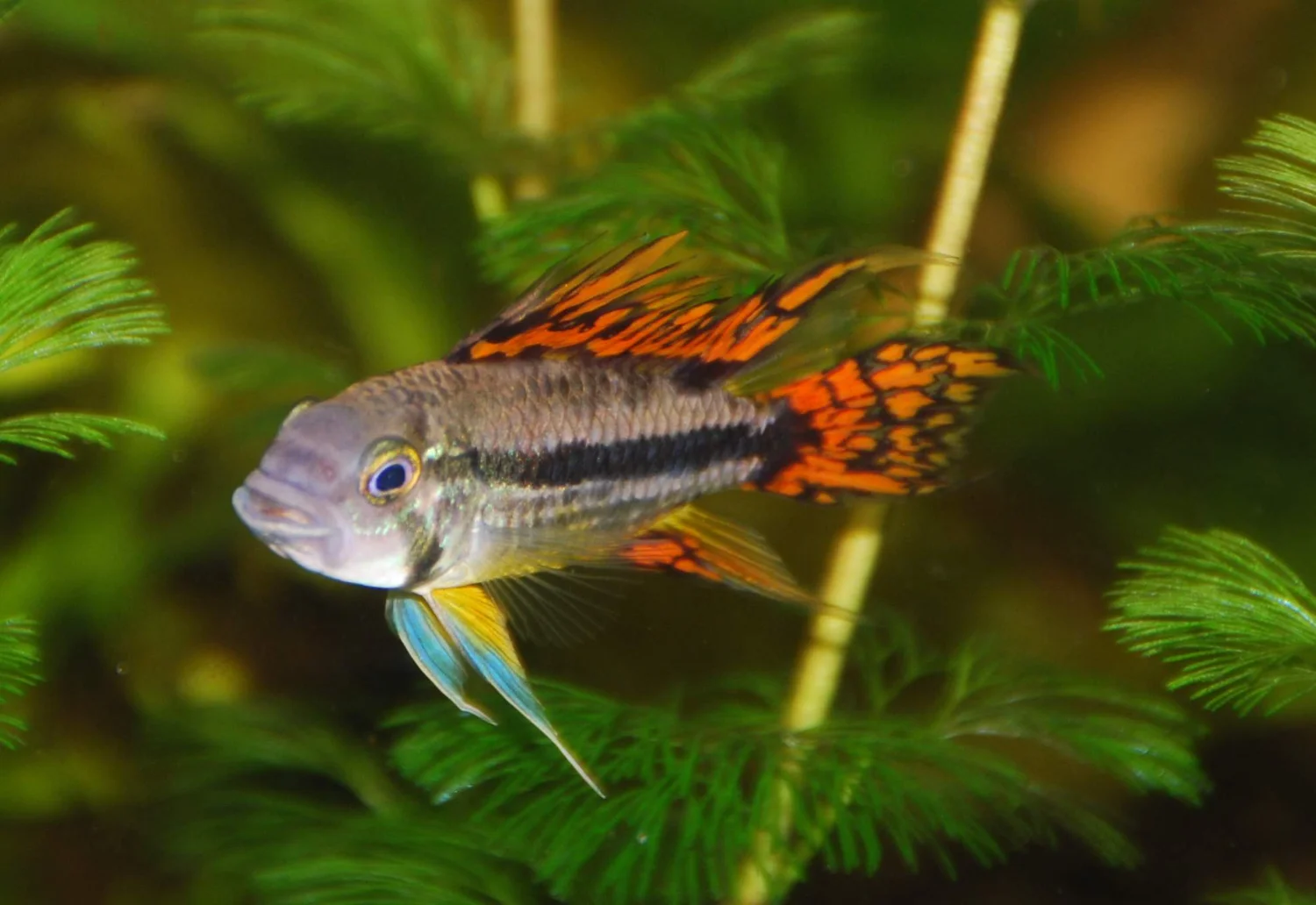
Know what you’re looking at
Males are more elaborately colored and finned than females. Some fish sold under the name viejita are macmasteri-like aquarium strains. Treat the retailer’s label as a starting point: good side photographs, ancestry and a specialist comparison are more reliable than red coloration alone.
From river to aquarium
Published records place macmasteri in the Guaytiquía and Metica basins of Colombia’s upper Meta system. This is Orinoco-basin context, not a Peruvian Amazon locality. Record precise geographic information when it is supplied, and avoid assigning a river name to ornamental stock without supporting records.
A practical aquarium plan
The site uses a 75-litre planning minimum with a 60 × 30 cm base. Place hiding areas at opposite ends and interrupt the line of sight between them. A fish restricted to the surface or behind equipment needs intervention; simply adding another cave beside the dominant fish’s territory may not help.
Feeding with observation
Provide small invertebrate foods and a suitable prepared food if accepted. Observe feeding from more than one location. In a pair, check body condition separately rather than using the male’s appetite as evidence that both fish are doing well.
When breeding changes the balance
Expect cavity spawning and vigorous female defense. A breeding project starts with compatible individuals, not merely one fish of each sex. Keep separation equipment ready and avoid repeated disturbance around the spawning site; record conditions and outcomes before deciding which variable to adjust.
Choose the company carefully
Aquarium-bred fish may fit a restrained community, but bottom-dwelling competitors can reduce the usable territory quickly. Compare water requirements and behavior together. If fry production matters, begin with a dedicated arrangement instead of trying to solve predation after the first brood emerges.
Keep the story with the fish
Clarify whether the seller means a recognized species, a selectively bred strain or a trade identification. Retain the exact original label in records, even if a later identification changes. Do not market offspring as a locality form when the parents have only a commercial color name.
Sources & editorial notes
Source-checked 2026-09-24. Species facts draw on the references below; aquarium targets, difficulty ratings and planning advice are our editorial synthesis. Targets are deliberately narrower than some reported field ranges and are not a guarantee for every locality or strain.
Informal groups and complexes are navigation aids, not fixed taxonomic ranks. Read the editorial approach.