Know what you’re looking at
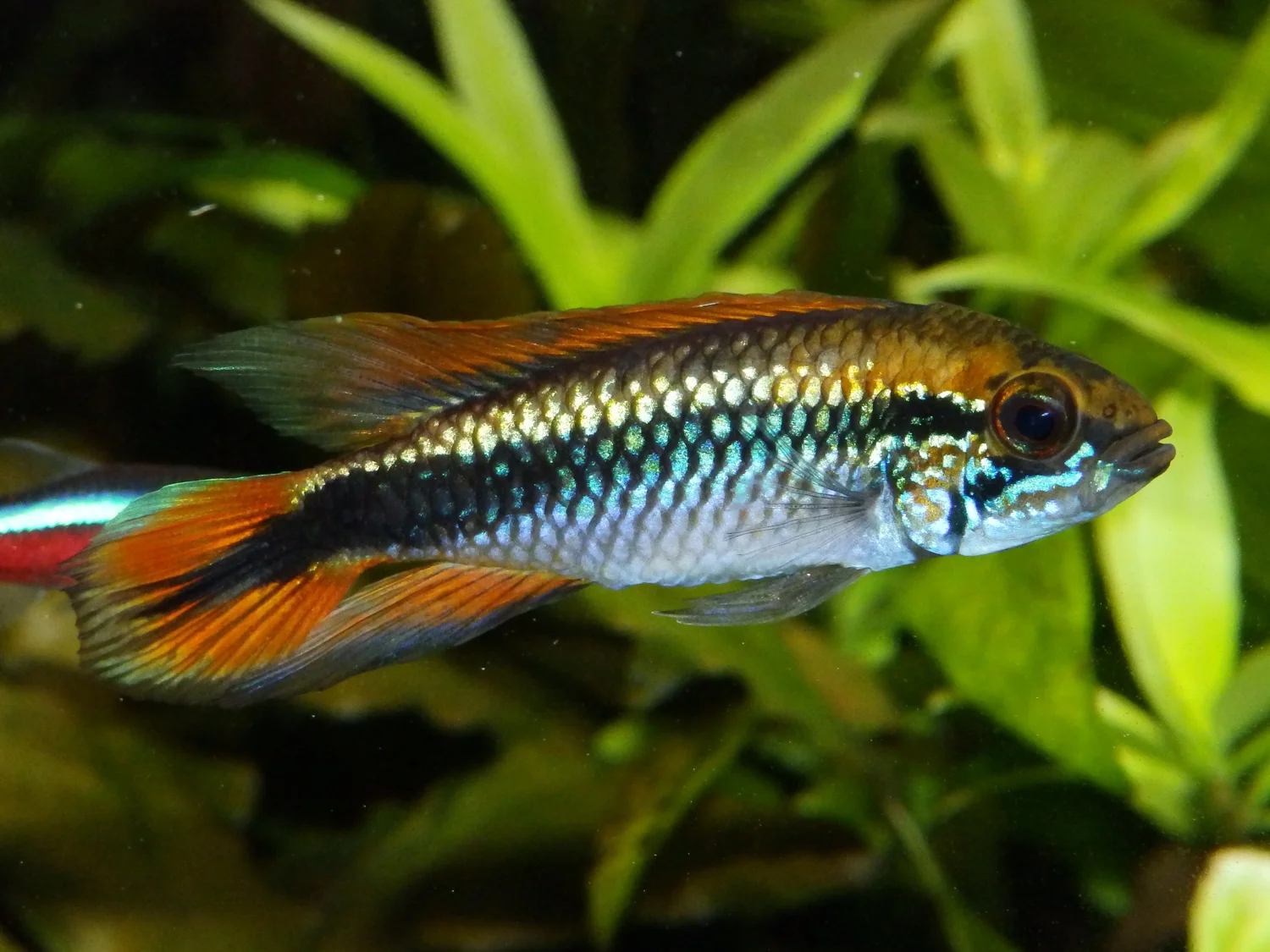
Two longitudinal dark bands help explain the name, while mature males may develop extended fin tips. Locality names in the trade are not always applied consistently. Photograph the fish in a calm state and retain the exact supplier label before attempting a more precise identification.
From river to aquarium
This is a western Amazon fish associated with quiet, sheltered waters. The landscape contains many distinct populations and conditions; a broad distribution does not imply uniform requirements. Seek the actual source history and use it to refine a setup based on shelter and stable soft water.
A practical aquarium plan
Allow at least a 75 × 30 cm footprint and 90 litres in this guide. Prepare replacement water in advance and confirm its temperature and mineral content. A consistent routine is more useful than repeated small chemical corrections made in reaction to isolated readings.
Feeding with observation
Ask which foods the fish currently accepts and continue those during settling. Introduce dietary variety once feeding is dependable. Watch smaller or subordinate individuals closely so a confident male does not conceal a feeding problem elsewhere in the aquarium.
When breeding changes the balance
Treat breeding as a locality-informed project. Document the parents, water preparation and results before adjusting conditions. Prepare a backup aquarium and fry food early; neither a beautiful male nor a published water range establishes that two particular adults will form a workable breeding arrangement.
Choose the company carefully
A species aquarium is the default recommendation here. Community companions can make it harder to interpret hiding, food refusal or fry loss. If companions are introduced later, keep the change small and reversible and judge the response of each adult separately.
Keep the story with the fish
Locality labels such as river names are meaningful only when supported by a chain of records. Keep unknown-origin stock separate from documented locality lines. Preserve uncertainty in offspring labels and avoid combining populations simply to produce a more colorful male.
Sources & editorial notes
Source-checked 2026-09-24. Species facts draw on the references below; aquarium targets, difficulty ratings and planning advice are our editorial synthesis. Targets are deliberately narrower than some reported field ranges and are not a guarantee for every locality or strain.
Informal groups and complexes are navigation aids, not fixed taxonomic ranks. Read the editorial approach.