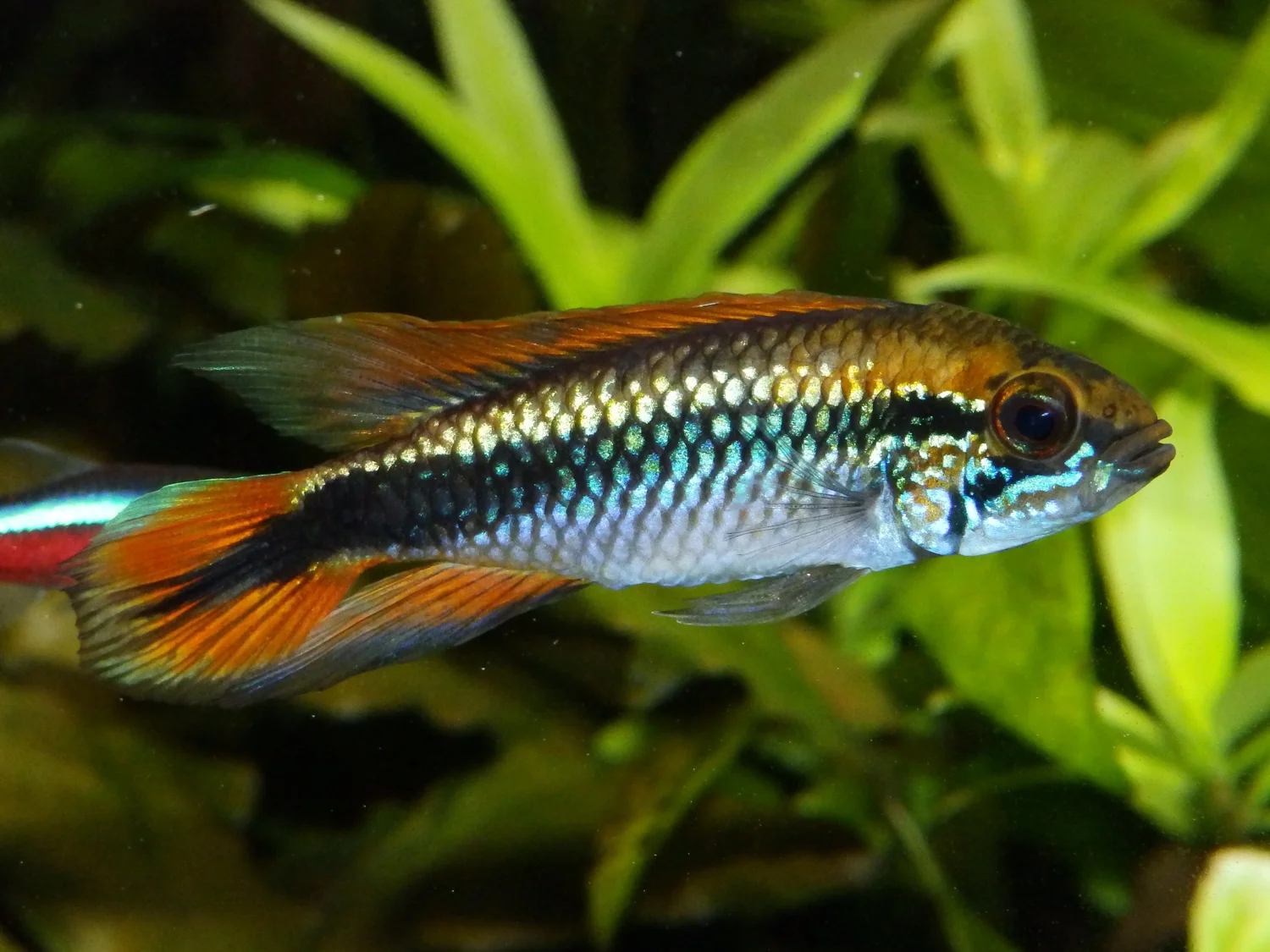
Know what you’re looking at
Locality forms can differ in head and body coloration, and “super red” is a trade description rather than a taxonomic diagnosis. Use clear photographs and documented origin when comparing it with similar slender species. Keep the commercial name and scientific identification in separate record fields.
From river to aquarium
The species is associated with the Uaupés and Içana drainages of the upper Rio Negro system. This context supports a soft-water approach, but it does not justify copying an extreme field reading without understanding how that aquarium will remain stable.
A practical aquarium plan
Plan a quiet, established aquarium with a repeatable replacement-water process. Our narrow target range is intended as a screening tool for experienced keepers. Check instruments and prepared water regularly; repeated corrective additions are a poor substitute for knowing what enters the aquarium at every change.
Feeding with observation
Confirm the supplier’s feeding routine and obtain the necessary foods before arrival. Offer small portions where the fish feels secure and record whether they are eaten. A fish hidden in cover should be observed patiently rather than repeatedly exposed in an attempt to make it feed.
When breeding changes the balance
Treat reproduction as a specialist soft-water project informed by the parents’ origin. Set up gentle maintenance, fry food and a spare aquarium before pairing. Document each attempt and change one manageable factor at a time; a single successful spawn is not proof that a routine is consistently reliable.
Choose the company carefully
The Finder excludes this species from general community recommendations. A quiet species aquarium makes water management and individual observation simpler. Avoid adding companions merely to make a shy fish more visible; first establish that shelter, feeding and social compatibility are adequate.
Keep the story with the fish
Preserve Uaupés, Içana or other collection information only when it is actually documented. Do not mix locality lines casually. When distributing offspring, report the parents’ source and any uncertainty plainly so a commercial color label does not replace meaningful breeding history.
Sources & editorial notes
Source-checked 2026-09-24. Species facts draw on the references below; aquarium targets, difficulty ratings and planning advice are our editorial synthesis. Targets are deliberately narrower than some reported field ranges and are not a guarantee for every locality or strain.
Informal groups and complexes are navigation aids, not fixed taxonomic ranks. Read the editorial approach.